For years, I could not reliably raise my heart rate high enough to qualify as aerobic activity.
Medication limited me.
Injury complicated things.
My body did not respond the way it once had.
I could move.
But I could not generate aerobic effort in a way that was consistent and sustainable.
That changed this week.
Not because I pushed harder.
Not because I added more.
In fact, I simplified.
I paused the gym.
I paused my hourly step target.
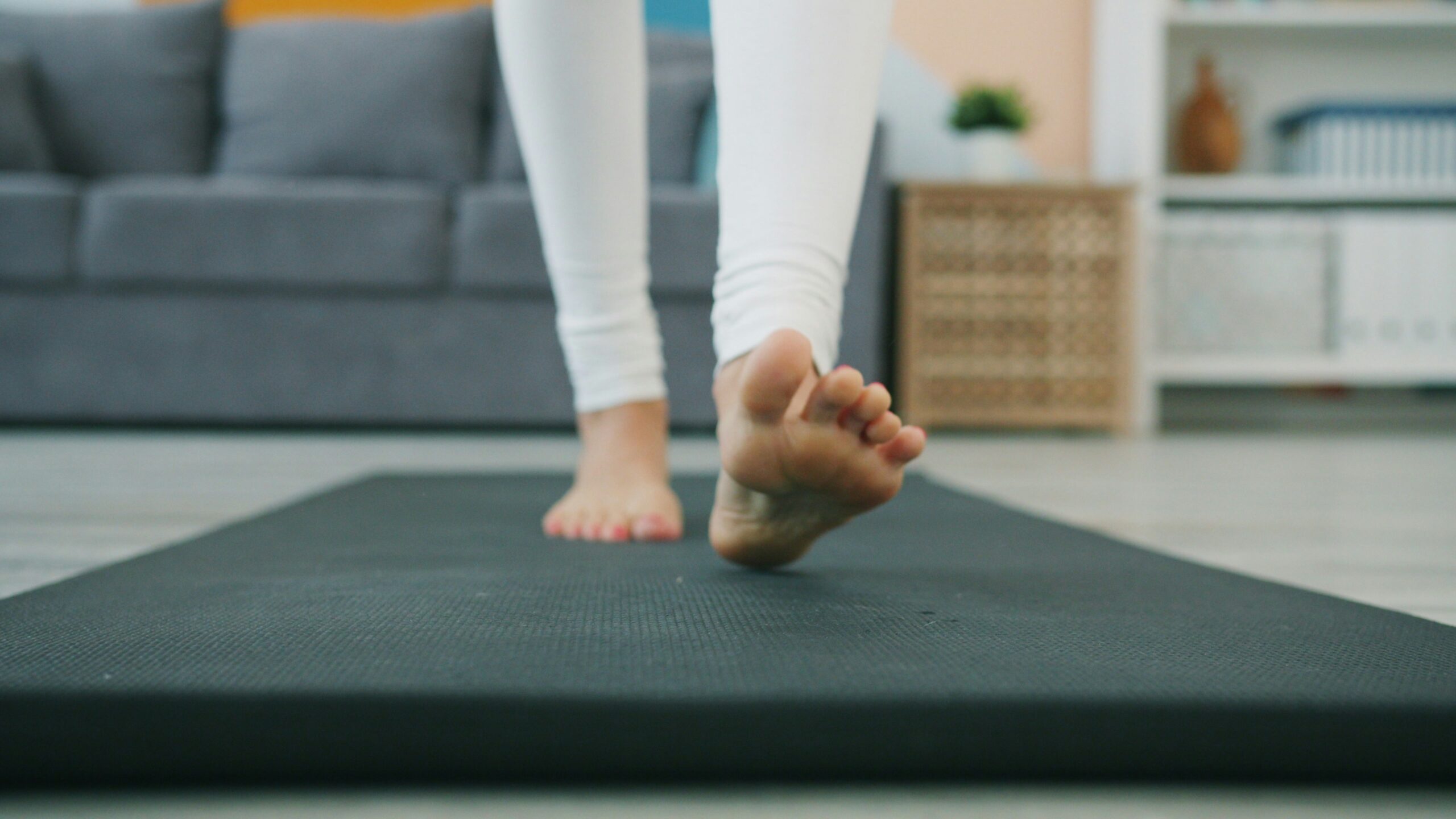
I chose one tool — the Walk at Home videos — and stayed with it.
Beginner level.
Single knee raises instead of doubles.
Fifteen minutes at a time.
Then two fifteen-minute sessions.
No ego.
No rushing.
But this wasn’t random.
Six Ways of Paying Attention
The Patterns are six ways of paying attention that Small Steps Lasting Change offers for moments exactly like this one.
The Patterns were quietly at work.
Centering helped me pause long enough to ask what was actually working — instead of defaulting to what I “should” be doing.
Choosing Outcomes clarified that the goal was aerobic consistency, not gym attendance.
Experimenting allowed me to stay at beginner level without shame and modify movements without abandoning the workout.
Identifying Supports helped me recognize that the videos, the heart rate monitor, and even the music playlist were tools — not extras.
Drifting reminded me that pausing the gym was not failure. It was adjustment.
Because of those tools, something shifted.
My heart rate responded consistently.
My endurance improved.
My balance improved.
For the first time in years, I am not trying to get aerobic activity.
I know how to generate it.
That difference matters.
Trying feels uncertain.
Knowing feels stable.
Most of us are naturally more skilled in one area of self-care than another.
Some people move easily but struggle with nourishment.
Some understand food deeply but feel uncertain in their bodies.
Some find structure comforting.
Others find rhythm in motion.
These are different skill sets.
Different histories.
Different strengths.
Different constraints.
It is normal for one practice to feel steadier than another.
It is normal for one to develop faster.
You are not behind because one feels harder.
You are where you are in this practice right now.
The goal is not to make them equal.
The goal is to keep growing in each, according to your actual circumstances.
For me, Nourish has always drawn on strengths I already had — pattern recognition, structure, data, language.
Move has required something different — patience with limitation, rebuilding balance, adapting physically in real time.
Neither is ahead.
Neither is behind.
They are developing at their own pace.
This week, Move caught up a little — not to Nourish, but to itself.
Today I layered the hourly walks back in — supported by a playlist I had forgotten I loved. Music returned joy to the rhythm.
Tomorrow I’ll reintroduce the gym — not as my base, but as variety.
The base is now something I can reproduce at home.
This is what the spiral looks like.
You do not return to the same place.
You return with skill.
You are not starting over.
You are building capacity.
And capacity creates satisfaction.
Not adrenaline.
Not urgency.
Satisfaction.
Continuing the Story
This is part of a longer story about movement. You can read it from the beginning here.
About this post
This post is about Move, one of the four Pillars of Small Steps Lasting Change. It looks at how The Patterns (Centering, Choosing Outcomes, Experimenting, Identifying Supports, and Drifting) turned effort into something repeatable. Learn more about Move and The Patterns.
Read our other posts about Move.
About Small Steps Lasting Change
Small Steps Lasting Change is a wellness practice for people living with chronic illness and changing capacity. It is built around four Pillars (Move, Nourish, Rest, and Protect) and six Patterns for navigating change as it actually happens in a human life.
Nora Chaus is the founder of Small Steps Lasting Change. She is a retired registered nurse, a facilitator, and a work in progress. She divides her time between Portugal, Canada, and Baltimore.