May 17, 2026 — Setúbal, Portugal
I am a retired nurse. I have been carefully observing my own body for fifty years. I keep spreadsheets. I ran elimination diets before they were talked about in mainstream healthcare. I have data going back decades on what I eat, what I react to, and what happens to my body when conditions change.
So when I look at my weight chart from the last six weeks, I am not looking at a number. I am looking at a dataset.
And the dataset is telling me something important — not just about me, but about the framework I teach.
Three Environments. One Body. Clear Results.
In April 2026 I spent several weeks in Calgary, Canada, caring for my granddaughter. I was walking more than usual — motivated by having somewhere to go, someone to get to. My weight dropped meaningfully. Then I came home to Baltimore and it climbed back.
In May 2026 I came to Setúbal, Portugal for a six-week trip. By May 15, Day 12, I had lost ten pounds.
I want to be precise about what those ten pounds are. They are not primarily fat. Fat loss is slow and grinding — it doesn’t move like this. What I am watching is fluid. The extra water my body has been holding, the water that makes it harder for my heart to pump. I have atrial fibrillation, which is the primary cause of my heart failure. My heart already works harder than it should. What I may be watching, in real time on a scale in a Portuguese apartment, is my heart working less hard. Less inflammatory load. Less fluid backup. Easier pumping.
I resolved years of lymphedema through diet and lifestyle. I no longer need the daily pump sessions that used to be required to move fluid off my body. I no longer wear compression stockings. That has been true for about two years, maintained through careful attention to what I eat.
Here, that vigilance is unnecessary. The environment does the work.
What the Research Says
This is not just my experience. There is a growing body of research on what drives chronic low-grade inflammation — the kind that contributes to fluid retention, cardiovascular strain, diabetes and and the chronic conditions many of us are managing.
The findings are consistent: ultra-processed foods, refined carbohydrates, added sugars, and hidden sodium all promote systemic inflammation. And inflammation exacerbates fluid retention — making swelling more pronounced, making the heart work harder, making everything harder.
A meta-analysis of 2,300 subjects across 17 clinical trials found that greater adherence to the Mediterranean diet was associated with significantly lower levels of inflammatory biomarkers — particularly CRP and interleukin-6, the markers of exactly this kind of chronic low-grade inflammation.
The Mediterranean diet. Which is what I am eating in Portugal. Not because I am trying. Because it is what is available here. Because the default food environment is built around it.
What Calgary and Portugal Have in Common
When I looked at my data honestly, I asked myself: what do Calgary and Portugal have in common that Baltimore doesn’t?
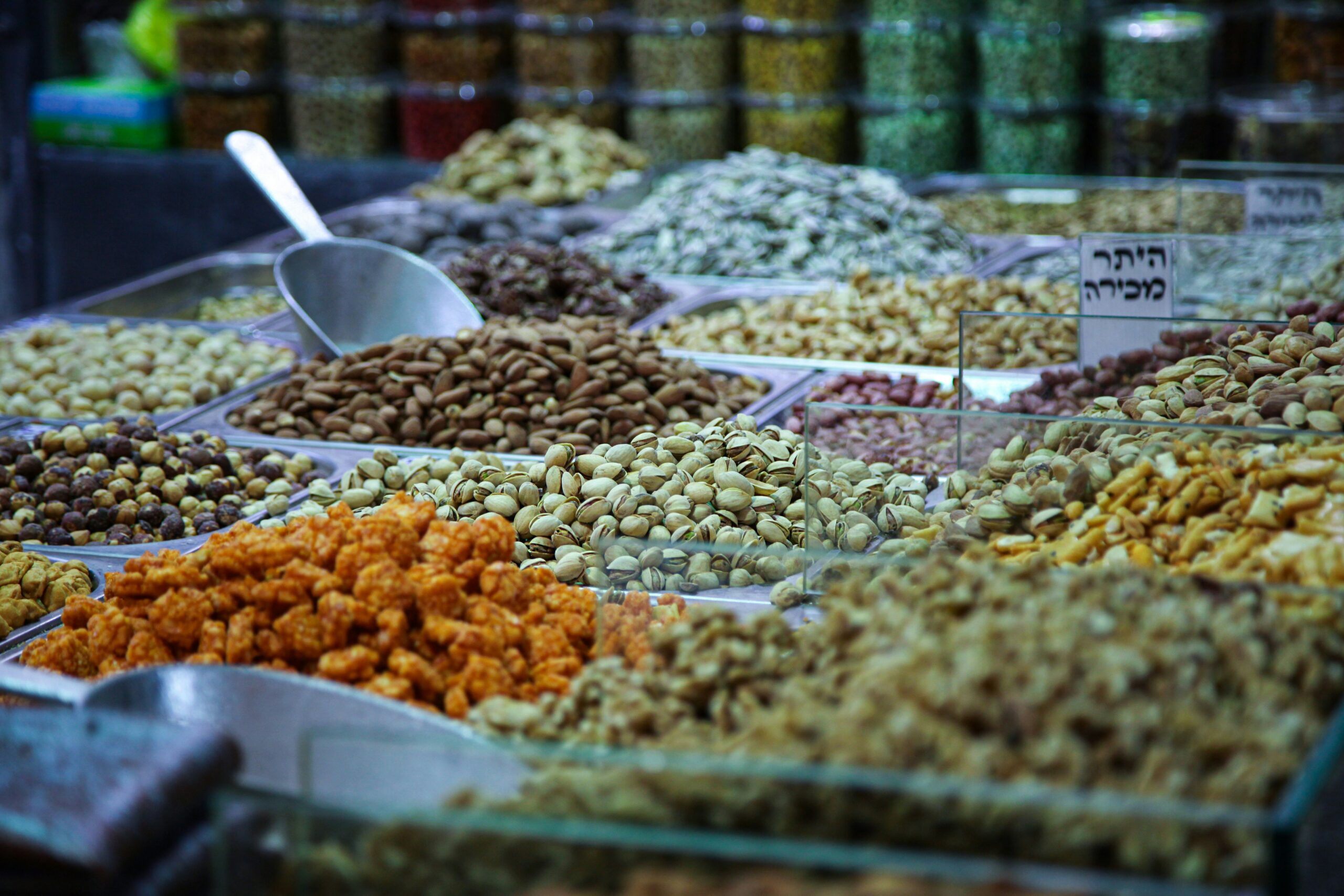
Both places I walked more — but I walk because I want to get somewhere, not because I am disciplined. Calgary had my granddaughter. Portugal has the Mercado do Livramento (the municipal market), Avenida Luísa Todi (the waterfront boulevard), the Praça do Bocage (the poet’s square), the bakery Érica recommended, the fish vendor whose wife sliced my corvina with a heavy knife and beamed when I said até logo (see you later).
But walking more doesn’t explain the speed or magnitude of the fluid release. Something else is happening. Here is what I think it is: the food environment.
In Calgary, I found myself eating lots of fresh raw fruits and vegetables because that’s what my granddaughter wanted. Here in Portugal, at the Mercado do Livramento, there is an abundance of fresh, local, in-season produce available to me and I find myself gravitating to it even more than I do in Baltimore.
In Baltimore, even eating as carefully as I do, there is processed food in my path at every turn. Hidden sodium in bread. Added sugar in condiments. Inflammatory oils in restaurant food. I am vigilant. But vigilance has limits. And the cognitive load of that vigilance — reading every label, asking servers to modify every dish, navigating a food system designed to make the unhealthy choice the easy choice — that load is itself a stressor.
Here, I eat straight off the menu at every restaurant without asking for anything to be removed. The bread is made of things that have fed people for thousands of years: whole grains, seeds, yeast, salt, water. The vegetables came from small farms I can see from the train window.
My allergies are better here too. Not just my weight — my entire inflammatory burden appears to be lower.
The Quality Variable
I spent fifteen years doing elimination diets. I narrowed my safe foods down to twenty-five. I developed osteopenia from eliminating dairy. Then, about two years ago, I started carefully adding foods back — but only in their highest quality forms.
Pastured eggs: fine. Conventional eggs: reactive. Grass-fed dairy: fine. Regular dairy: reactive. Sourdough bread: fine. Commercial bread: reactive.
The pattern was consistent and clarifying: I was not reacting to food categories. I was reacting to quality and processing. The variable was not egg or dairy or grain. The variable was how it was raised, how it was made, what was done to it before it reached me.
In Portugal, the default quality is high. The tofu I bought at a local market has three ingredients: soybeans, water, and glucono delta-lactone — a natural coagulant. The cheese I eat every day comes from Azorean cows that graze on pasture 365 days a year, with no additives and only four ingredients. The bread costs €2.20 (approximately $2.40) and has no sugar.
I am not eating differently here in terms of food categories. I am eating the same categories at a quality level that my body recognizes as food.
The Prescription I Wrote for Myself
When I understood what was happening, I wrote myself a prescription for returning to Baltimore:
- CSA share from my local organic grocer — a mystery box of seasonal vegetables that I cook and eat, motivated by the challenge and the variety, the same way I am motivated here by the market
- A walk in Patterson Park every day, packed lunch, somewhere to go
- Two unexplored fish merchants at the market down the street — I had never gone to them
- No mayonnaise — olive oil on my bread instead
- No processed condiments
- Ezekiel bread, the closest American equivalent to what I eat here
- Whole food, no packages without reading, no hidden ingredients
⠀Not a diet. Not a program. A food environment, redesigned.
What This Means for SSLC
The Nourish practice in Small Steps Lasting Change is not about counting calories or following a meal plan. It is about designing a food environment — at home, at the market, at restaurants — that makes the whole food choice the easy choice.
That is what Portugal has done as a culture. That is what the Portuguese government has formalized in their dietary guidelines — the Roda dos Alimentos (the Wheel of Foods) — built explicitly on the Mediterranean dietary pattern, which emphasizes seasonal local food, olive oil, fish, legumes, vegetables, fruit, whole grains, and herbs instead of salt.
The research agrees. The Portuguese government agrees. My body agrees.
For some of us, moderation is not enough. For some of us, the only way the food noise goes quiet, the only way the fluid comes off, the only way the heart works less hard — is to change the environment entirely.
That is what Small Steps Lasting Change teaches. And that is what Portugal is showing me, in real time, in my own body, one market day at a time.
For Further Reading
- FAO Portugal dietary guidelines — Full overview in English with links to Portuguese documents
- Mediterranean diet and inflammatory biomarkers — Meta-analysis, 2,300 subjects, 17 clinical trials
⠀
Nora Chaus is the founder of Small Steps Lasting Change. She is a retired registered nurse, a facilitator, and a work in progress. She divides her time between Portugal, Canada, and Baltimore.