By the summer of 2025, walking had become part of my life. Not something I forced…
I looked forward to my daily walks. I liked leaving the car at home and not having to worry about finding parking in the city. I enjoyed riding the bus so I could walk in different neighborhoods. Movement had become a source of pleasure and independence.
I had become the person I had once only imagined becoming:
a person who enjoyed movement.
Last September, that expectation collapsed.
I experienced a sudden onset of intense pain along the outside of my right foot. At first, my physical therapists adjusted my treatment plan, assuming the problem was related to a new pair of shoes. When the pain worsened instead of improving, I was referred to a specialist.
I learned I had tendinitis and a possible tear in the tendon.
I was put in a walking boot and referred to a specialty physical therapist. I was told I could walk only between the bed, the chair, and the bathroom.
When my foot was injured, the hardest part wasn’t the pain. It was realizing that the assumptions I had been living inside no longer fit.
Every step hurt.
Even therapy made the pain worse.
I felt boxed in both physically and emotionally. Depressed. Trapped in a body that no longer matched the identity I had just claimed.
It felt like the opposite of riding my bicycle freely as a child, and the opposite of exploring Baltimore with Joy. The freedom I had worked so carefully toward was suddenly gone.
⸻
Re-entering Movement Without Expectation
After two weeks in the walking boot, my other hip hurt more than my injured foot. I was relieved when my physical therapist told me I could remove the boot and begin walking again. At the same time, I felt deeply disappointed by how limited that permission was.
I was allowed to add a single five-minute walk inside my home once a day.
That was it.
Over the following weeks, I was allowed to progress to three five-minute walks, then to ten-minute walks, all indoors. Eventually, I was permitted unlimited walking inside my home, but still no outdoor walking. The uneven sidewalks in Baltimore made that too risky.
This was not the movement life I had imagined. But it was movement.
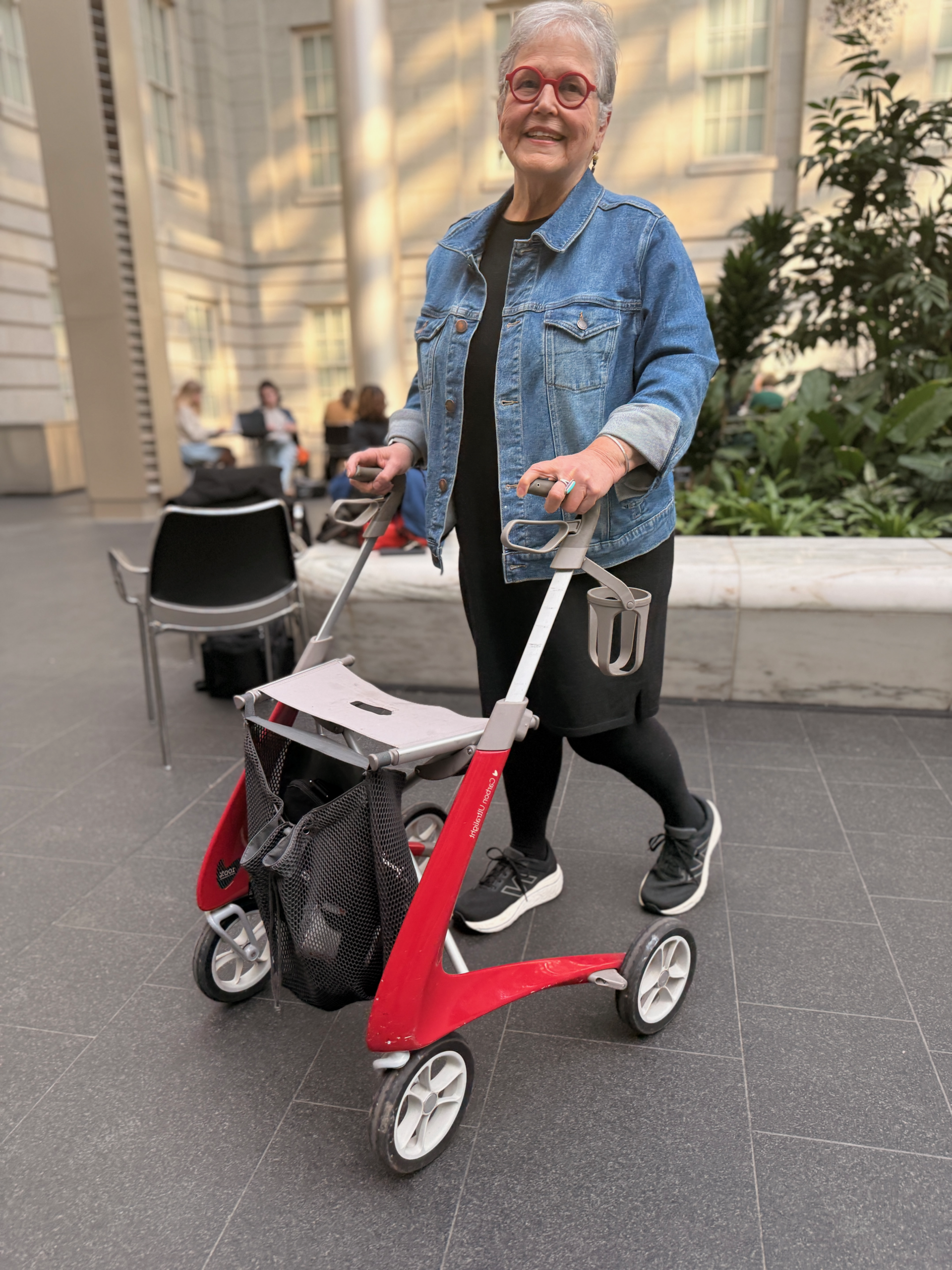
To make it possible, I leaned on supports — not to push myself forward, but to stay oriented.
None of these restored what I had lost.
But they helped me stay in relationship with movement while my expectations adjusted.
⸻
What Changed
I did not “get back” to movement.
I learned how to move without the identity I had been relying on.
The injury forced me to let go of an assumption — that once movement became enjoyable, it would stay that way. What replaced that assumption wasn’t despair or discipline, but awareness.
I was still in my body.
I was still in the process.
I just needed to listen again.
That listening didn’t happen all at once. It happened in small, supported steps, five minutes at a time, as I found my way back into movement without demanding that it feel the way it once did.
⸻
Finding the Magic Again (Without Forcing It)
I began walking back and forth the length of my long, narrow Baltimore row house, but the magic was gone.
I worried that I had lost it for good. That I would never again be a person who enjoyed moving.
I was walking, but it felt mechanical. Empty. Like something essential was missing.
Around that time, my daughter got a new Fitbit and told me how it reminded her every hour if she hadn’t walked 250 steps. My Apple Watch wouldn’t do that. I briefly considered buying a Fitbit, but before I did, I searched the app store and found a 99-cent app that could send hourly reminders if I hadn’t met my step goal.
That turned out to be the cue I needed.
A few weeks later, my son gave me access to his Apple Music account. With the help of prompts written for me by ChatGPT, I created a playlist made up of music I had forgotten I loved. From my listening habits, Apple Music began suggesting more songs. Within days, I had a large playlist.
I started listening to it as I walked.
Then I noticed something: certain songs felt especially good to walk to. I copied those into a second playlist and named it Walking Music. The music paced me. It softened the effort. It made the walking feel less lonely and more alive.
Soon, as I passed the hand weights sitting nearby, I found myself picking them up and moving my arms while I walked. It felt good. Before long, I would stop in the kitchen or the living area and dance to the music.
The magic hadn’t disappeared.
It had just been waiting for support.
⸻
Movement Expands Again
A few weeks ago, a friend told me about a new gym she had joined. Her insurance paid for the membership. She invited me to come with her. It turned out we have the same insurance.
The gym is lovely. Calm. Welcoming.
I found water classes and chair yoga classes that I genuinely enjoy. Having a friend to go with me became the perfect cue to get there. Not pressure. Companionship.
Then last week, I remembered a YouTube video that had been recommended to me: Walk 500 Steps in 5 Minutes at Home.
It was hard at first.
I’ve learned that it helps to have Joy nearby for balance during some of the moves. Every day, the routine gets a little easier. I can feel my body getting stronger.
Now I’m working toward using that routine throughout the day — responding to my hourly step reminders with five minutes of movement at home. I’ll be ready for the ten-minute version before long.
⸻
Staying in the Spiral
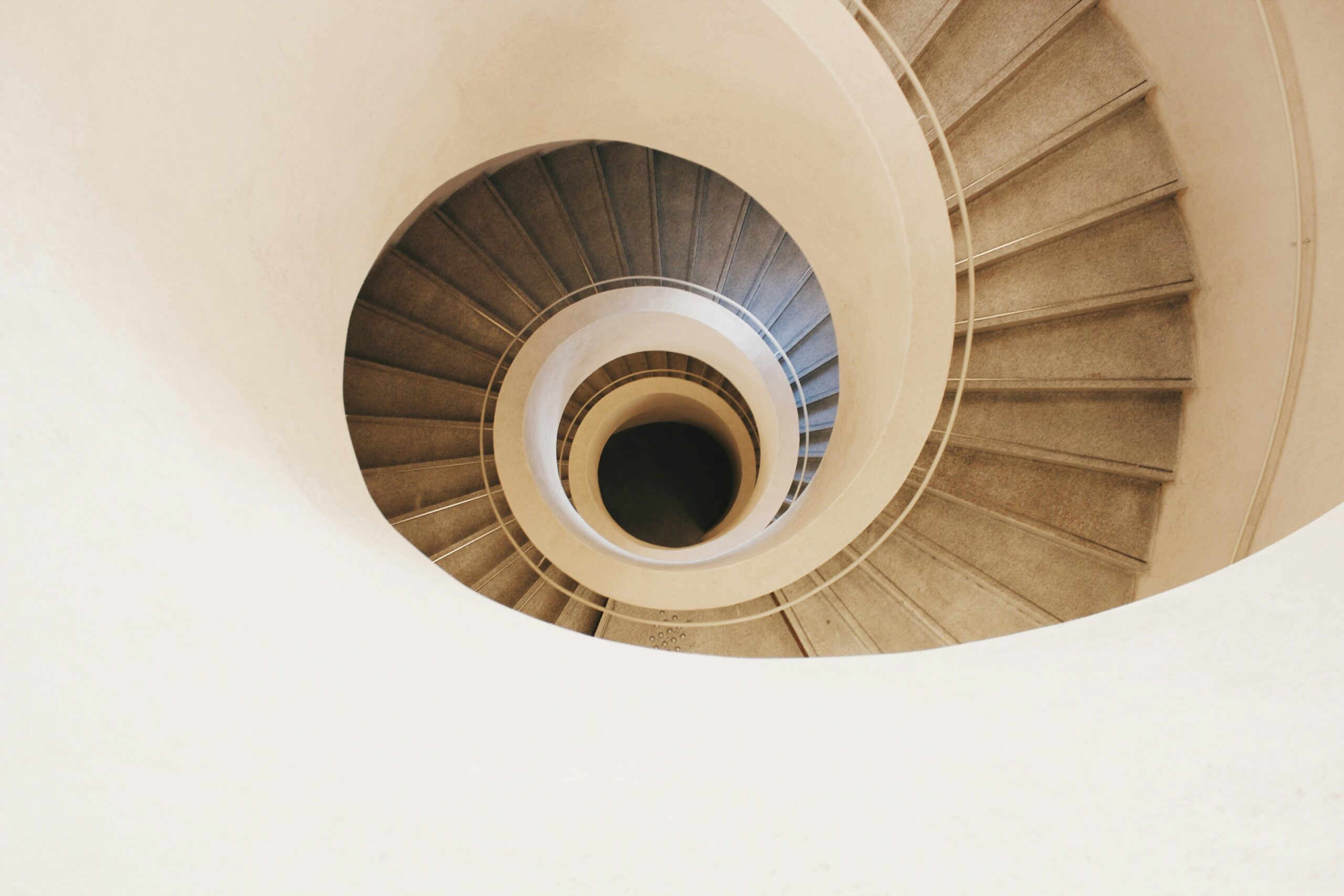
In Small Steps Lasting Change, the Spiral of Change describes how self-care actually unfolds, not in a straight line, but in a cycling motion that deepens over time. You don’t return to the same place. You arrive somewhere that looks familiar, but you are not the same person.
I didn’t get the magic back by trying harder.
I found it by paying attention to what helped — cues, music, companionship, support — and letting movement rebuild itself around those conditions.
The spiral didn’t bring me back to where I had been.
It brought me somewhere steadier.
What I understand now is that change didn’t stop when my movement did, and it didn’t resume when movement returned.
It kept unfolding.
The spiral didn’t move me backward or forward. It moved me through familiar places with more awareness and more skill. Each time I circled back to movement, I wasn’t the same person I had been before — even when the conditions looked similar on the surface.
When expectations fell apart, I didn’t lose progress.
I gained information.
I learned how to center without waiting for calm.
How to notice drift without turning it into failure.
How to choose supports instead of forcing behavior.
How to experiment again when something stopped fitting.
⸻
It Happened in Small Ordinary Moments
None of this happened all at once. It happened in small, ordinary moments — five minutes at a time, one cue at a time, one adjustment at a time — as I stayed in relationship with my body instead of trying to get back to a version of myself that no longer existed.
I still move in and out of difficulty.
I still circle familiar questions.
But each time, I do so with more steadiness.
Not because I’ve perfected anything.
Because I’ve learned how to listen.
That’s what lasts.
⸻
Continuing the Story
This is part of a longer story about movement. You can read it from the beginning here.
About this post
This post is about Move, one of the four Pillars of Small Steps Lasting Change, and the third in a three-part series about relearning to move. It traces how Centering, Identifying Supports, Experimenting, and Drifting carried a movement practice through an injury and back out the other side, not to where it had been, but somewhere steadier. Learn more about Move and The Patterns that supported this change.
Read our other posts about Move.
About Small Steps Lasting Change
Small Steps Lasting Change is a wellness practice for people living with chronic illness and changing capacity. It is built around four Pillars (Move, Nourish, Rest, and Protect) and six Patterns for navigating change as it actually happens in a human life.
Begin where you are.
Nora Chaus is the founder of Small Steps Lasting Change. She is a retired registered nurse, a facilitator, and a work in progress. She divides her time between Portugal, Canada, and Baltimore.